
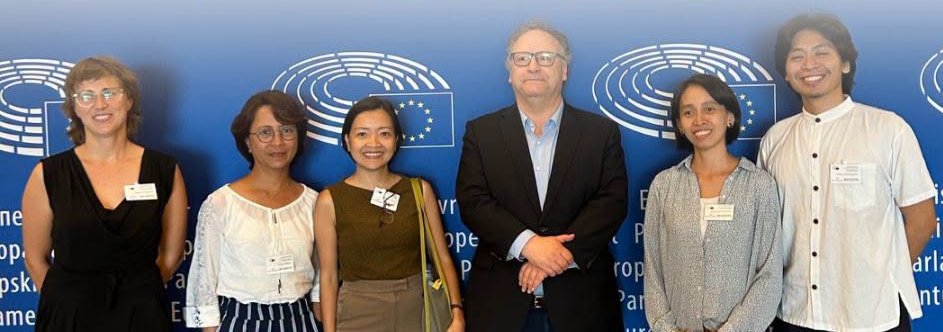
Brussels, Belgium — KARAPATAN Deputy Secretary General Maria Sol Taule and peasant advocate and former political prisoner Amanda Echanis met with several Members of the European Parliament, including Marta Temido, Rudi Kennes, Marc Botenga, Catarina Vieira, Jörgen Warborn, and Francisco Assis, to discuss the possible adverse implications of a Free Trade Agreement (FTA) between the European Union and the Philippines on the worsening human rights situation under the Marcos Jr. administration.
Taule and Echanis stressed that previous trade agreements have failed to significantly improve the lives of peasants, workers, and other marginalized sectors in the Philippines. Despite promises of economic growth and development, landlessness, low wages, job insecurity, and deteriorating working conditions continue to affect millions of Filipinos, they noted.
“The resumption of FTA negotiations should not proceed as though the human rights crisis in the Philippines does not exist,” said Taule. “Any agreement that claims to promote sustainable development must be assessed based on its impact on grassroots communities and people’s rights and livelihoods, particularly those of workers, farmers, Indigenous peoples, and human rights defenders.”
Taule also raised concerns over continuing reports of extrajudicial killings, arbitrary arrests, enforced disappearances, red-tagging, and the criminalization of dissent. As of March 31, 2026, KARAPATAN has documented 137 victims of extrajudicial killings, 16 victims of enforced disappearance, and more than 800 victims of arbitrary and unjust arrests.
Echanis, meanwhile, highlighted the persistent challenges confronting rural communities, including the persistence of land monopoly and landgrabbing by big landlords and corporations, the absence of genuine agrarian reform, and the harmful effects of trade liberalization policies that have exposed local producers to unfair competition.
“For decades, Filipino farmers have been told that free trade would bring prosperity and development, yet most remain impoverished, burdened by rising production costs and low farmgate prices, and with limited access to land and productive resources,” she said.
Taule and Echanis urged European lawmakers and policymakers to ensure that human rights obligations are not subordinated to economic and commercial interests.
The meetings formed part of a broader effort by Philippine human rights and peasant advocates to engage European institutions on the human rights situation in the Philippines and to call for greater scrutiny of policies that could have far-reaching social, economic, and political consequences for grassroots communities.