
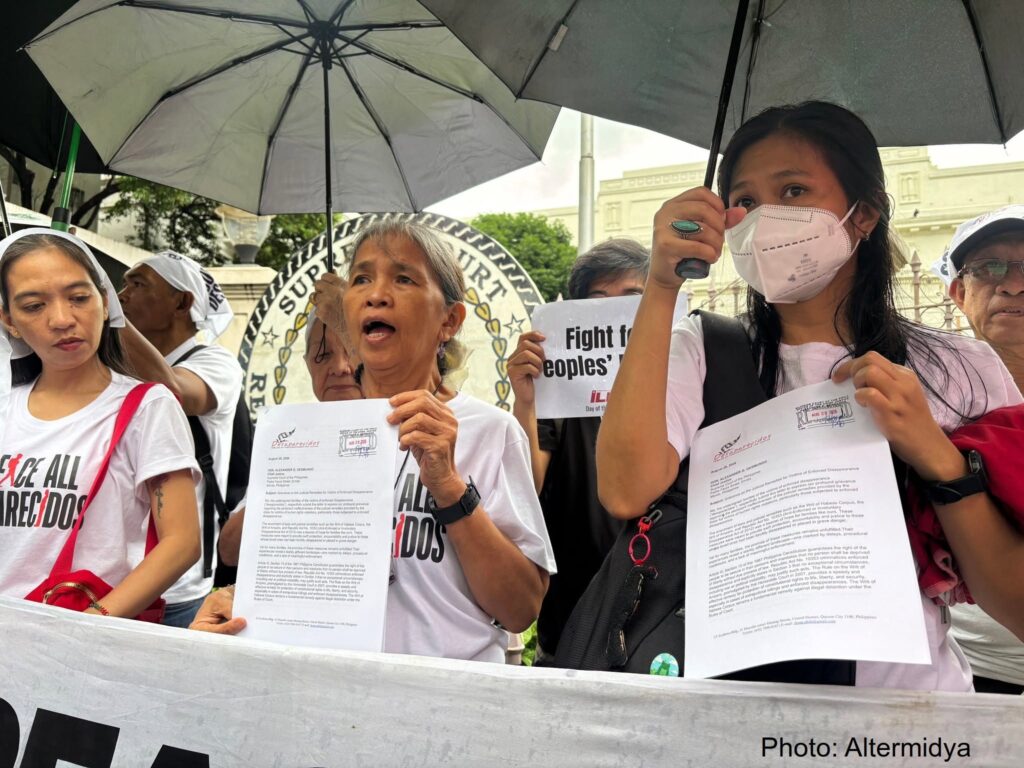
On the eve of the International Day of the Disappeared, families of desaparecidos today submitted a letter to the Supreme Court calling for a thorough review of the writs of amparo and habeas data, citing that these have failed to protect victims of enforced disappearance and their families.
The letter, signed by families of desaparecidos, including those who have filed for the petition of the writ of amparo, was addressed to Chief Justice Alexander G. Gesmundo.
“For many families, the promise of these measures remain unfulfilled,” said Edita Burgos, mother of missing farmer-activist Jonas Burgos. “What families have experienced are delays, procedural roadblocks, and lack of meaningful enforcement.”
The families noted that more than 1,900 victims of enforced disappearance have been documented in the Philippines since the Marcos Sr. regime. They further cited 272 documented cases of enforced disappearance during the period since the Writ of Amparo took effect on October 24, 2007, with 206 cases recorded during the Arroyo administration, 29 during the Aquino administration, 20 during the Duterte administration, and 17 under the Marcos Jr. administration.
Among the cases cited in the letter are those of Karen Empeño, Sherlyn Cadapan and Manuel Merino; Romulos Robiños; Nilo Arado and Maria Luisa Posa-Dominado; Jonas Burgos; James Balao; Elizabeth “Loi” Magbanua and Alipio Juat; Maria Elena Pampoza and Elgene Mungcal; William Lariosa; Dexter Capuyan and Gene Roz Jamil de Jesus; James Jazmines; and Felix Salaveria Jr.
Despite the issuance or granting of writs in several of these cases, the victims remain missing.
The families stressed that the continued disappearance of victims despite the utilization of judicial relief reveal the ineffectiveness of existing remedies.
“Rather than ensuring immediate protection and accountability, many petitions have been met with procedural delays, dismissals, or orders that are inadequately enforced,” Burgos added.
The families also raised concerns over the application of the writ of habeas data, particularly amid the use of surveillance, red-tagging, harassment, and unauthorized collection and dissemination of personal information against activists, human rights defenders, and ordinary persons.
They said the writs must be strengthened both as a preventive and protective measure, rather than being treated primarily as a corrective remedy after harm has already occurred.
The letter also called attention to the need to expand protection to groups and associations vulnerable to red-tagging and related threats, and to require the issuance of temporary protection orders alongside writs when necessary to prevent further harm.
“For families of the disappeared, every delay prolongs their anguish and allows impunity to persist. We are aghast that many more become victims of abduction and enforced disappearance, after loved ones have disappeared,” Burgos said.
The submission comes as families of desaparecidos and human rights organizations mark the International Day of the Disappeared on August 30.
“We will continue to demand justice, and realize justice wherever we may find it,” ended Burgos.